
Practical tips
Visiting northern Cyprus: crossings, currency and roaming
How to cross the Green Line, which documents to bring, and what changes for your car, currency and phone. A first look at Nicosia, Girne, Famagusta and Varosha.
23 September 2026 · 6 min read
By olé
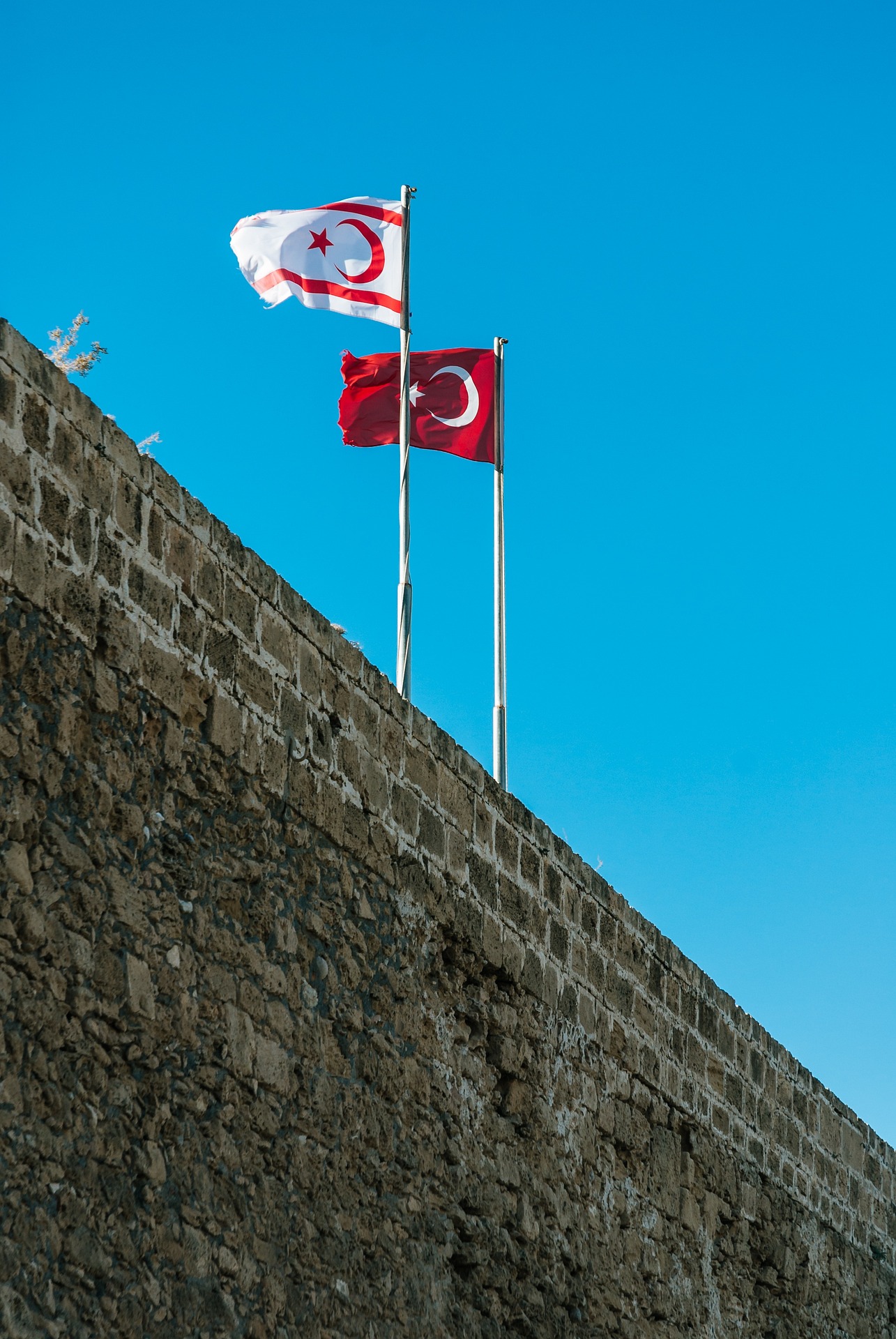
Visiting northern Cyprus means preparing a few things differently: your crossing point, documents, money and mobile connection. You can plan it as a visit from Nicosia or as part of a wider itinerary, depending on how much time you have.
This guide brings together the practical information you need to plan. It is not a detailed route through every destination: it is a starting point for understanding what changes when you cross and what to check before setting off.
The situation in a few lines
Cyprus has been divided since 1974. A United Nations-supervised buffer zone, known as the Green Line, separates the areas under the effective control of the Government of the Republic of Cyprus from the area administered by the Turkish Cypriot authorities. The self-declared Turkish Republic of Northern Cyprus is recognised only by Türkiye.
Although it is often called a border, here we mean a demarcation line, rather than an international border between two recognised states. Visitors to the island need to respect the checks and crossing conditions.
There are several crossings to the north
Nicosia is not the only place to cross. There are several authorised crossing points along the dividing line, from west to east. Choose one according to your starting point and whether you are walking or driving; do not try to cross on unauthorised tracks.
In central Nicosia, Ledra Street is a pedestrian crossing. Agios Dometios / Metehan, also in Nicosia, allows vehicles to cross. Deryneia is in the east, while options to the west include Astromeritis / Zodhia and Limnitis. Check the conditions and operation of your chosen crossing before travelling: they can change.
According to the Spanish Embassy in Nicosia, Spanish citizens can cross by presenting a valid Spanish national ID card (DNI) or passport. Bring the original document, even for a short visit. If you hold another nationality, check the requirements that apply to you; do not assume they are the same.
On foot, by car or on an excursion
For a stroll through the northern part of Nicosia's old town, crossing on foot at Ledra Street lets you carry on walking. For destinations further away, arrange transport there and back or book an excursion that confirms the crossing and required documents.
If you have a hire car, ask the company beforehand whether it permits crossing and what cover the vehicle retains. The usual policy may not cover the north. Additional insurance can be purchased at some crossings, but buying it does not replace the company's permission or guarantee cover for damage to your own vehicle, theft or assistance. Ask for each point to be clarified in writing.
To choose transport for the rest of your trip, see our guide to getting around Cyprus. Do not calculate the outing using driving time alone: allow room for checks and the return journey.
The currency changes: Turkish lira
The north uses the Turkish lira, shown as TRY or TL. Although some establishments accept euros, you should not rely on that everywhere. Ask which currency the price is in, what exchange rate they use and which currency your change will be given in.
Before paying by card or withdrawing cash, check your bank's fees. Bring an alternative payment method for small purchases, and do not assume a price without a currency symbol is in euros.
Mobile data: watch out for a change of network
The Republic of Cyprus (the south) is part of the European Union: if you travel with an EU mobile plan, roaming there is included as it is at home. Even so, always check with your operator how much data you can use abroad.
The problem begins when you approach the Green Line and cross to the north: your phone may connect to Turkish Cypriot networks outside the European roaming area. Included roaming does not apply there, and charges per megabyte are very high.
Before approaching the crossing, switch off data roaming or put your phone in flight mode to avoid accidental connections. Download maps, bookings and your return address beforehand so you do not depend on having internet on the other side.
If you will be spending time in the north, are coming from outside the EU or prefer to leave your usual mobile plan alone, a convenient option is a data eSIM such as those from Holafly, after checking which networks are supported in the area you intend to visit.
What to visit, without trying to see it all
The northern part of Nicosia offers a city visit on foot. Kyrenia, also called Girne, is an option for exploring the north coast; Famagusta, or Gazimağusa, for a walled city. Further away is the Karpaz peninsula, also known as Karpas, with coastal and rural scenery. These are distinct areas: choose according to your base and how far you want to travel.
Famagusta is home to Varosha, also called Maraş: an area left uninhabited in 1974, part of which opened to visitors in 2020. The whole area is not freely accessible. If you include it in your trip, check current conditions and keep to the designated routes, respecting signs and restrictions on access and photography.
Before setting off
Check the crossing, bring your documents, confirm transport and review both your mobile tariff and the scope of your travel and vehicle insurance. Sources for checking current conditions are listed alongside the article; this practical information was reviewed in September 2026.
If you are preparing for your arrival on the island, complement these notes with what to know before travelling to Cyprus. For the north, set aside a day with room to spare and a clear idea of where you want to go, without piling up destinations just because they look close on the map.
This article includes an affiliate link: if you use it to book the service, olé may receive a small commission at no extra cost to you. We only include it when we believe it answers a real travel question.