
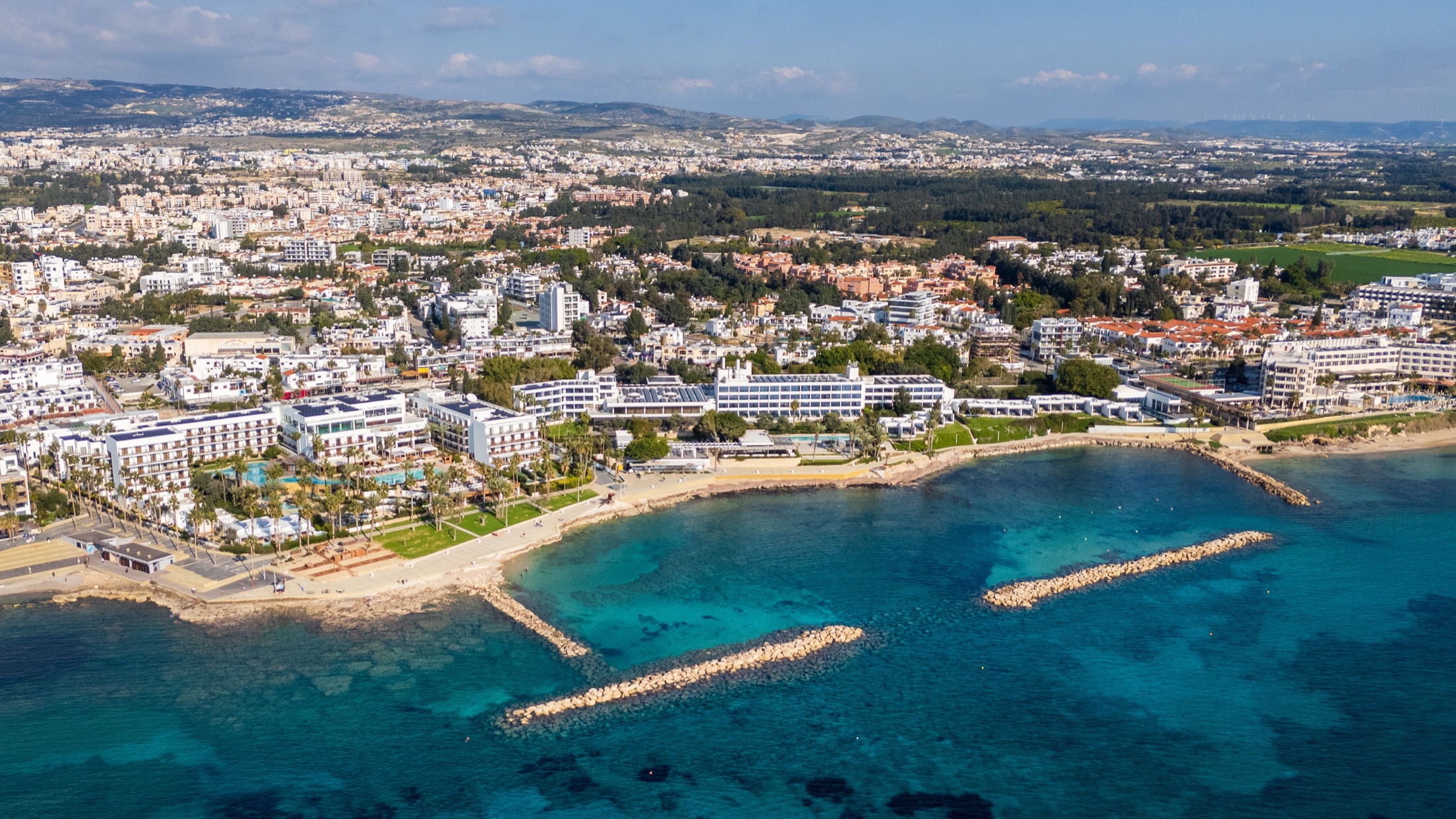
Paphos: where history unfolds beside the sea.
Paphos brings together things that elsewhere would be kilometres apart: Roman mosaics, rock-cut tombs, a harbour, town life, beaches and some of the landscapes most closely tied to Cypriot mythology. But to understand it, you need to leave the seafront. Paphos changes depending on whether you are in Kato Paphos, in the upper town or exploring the landscapes that begin a few kilometres beyond.
Type
History · Archaeology · Sea · Culture
Time
1–2 days
Car needed?
Not essential for Kato Paphos · useful for the surrounding area
Best time to visit
All year round · especially autumn, winter and spring
Ideal for
History · archaeology · culture · town and coast
In Paphos, history is not hidden behind a door. It keeps appearing in the landscape.
Stone · sea · myth · town
First: Paphos has more than one centre.
Paphos changes depending on whether you are down by the harbour and archaeological sites or up in the upper town. Understanding that difference makes a visit feel like more than a list of disconnected monuments.
Kato Paphos brings together the sea, harbour and archaeology. Ktima changes the pace with its market, urban life and upper-town streets. And some important stories begin beyond present-day Paphos.
Kato Paphos
Sea + harbour + archaeology
Ktima / Old Town
Upper town + market + urban life
Surrounding area
Geroskipou + Palaipafos + Petra tou Romiou
Kato Paphos
Start beside the sea.
Stone, mosaics and the harbour in a single landscape. This is where the city's two major archaeological sites are found.
 recommends
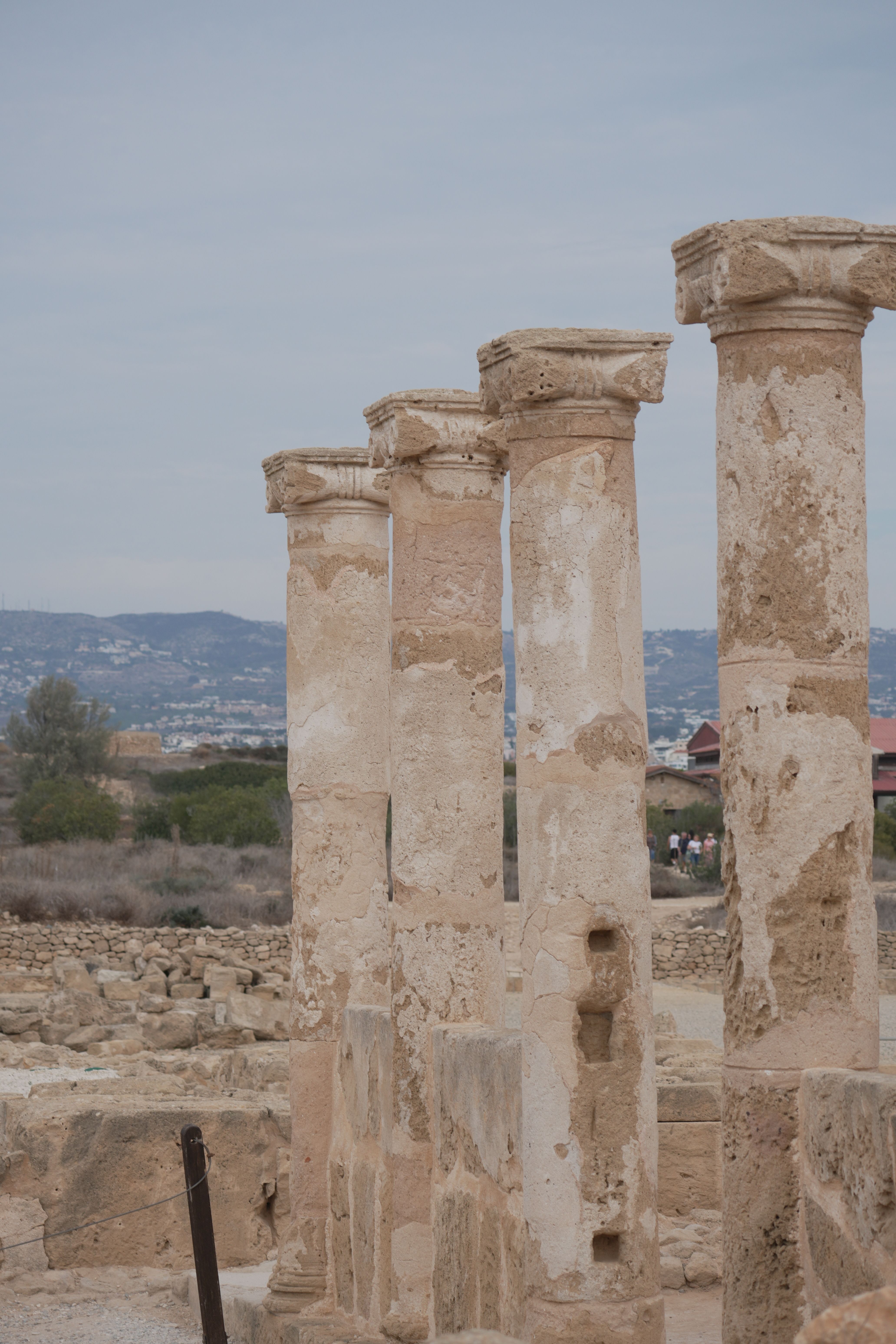
Archaeological Park of Kato Paphos
Paphos's major archaeological site: an ancient city spread out beside the Mediterranean.
This is one of the places that really make it worth spending time in Paphos. The site brings together remains from antiquity to the medieval period, although the Roman era takes centre stage. From the 2nd century BC to the 4th century AD, Paphos was the capital of Cyprus. Today, much of that history lies scattered across an open landscape beside the sea.
The mosaics
Some of Paphos's most impressive works are not in a museum. The floors of ancient Roman villas preserve large compositions with extraordinarily detailed mythological scenes. House of Dionysos, House of Theseus, House of Aion and House of Orpheus are among the site's key stops.
recommends
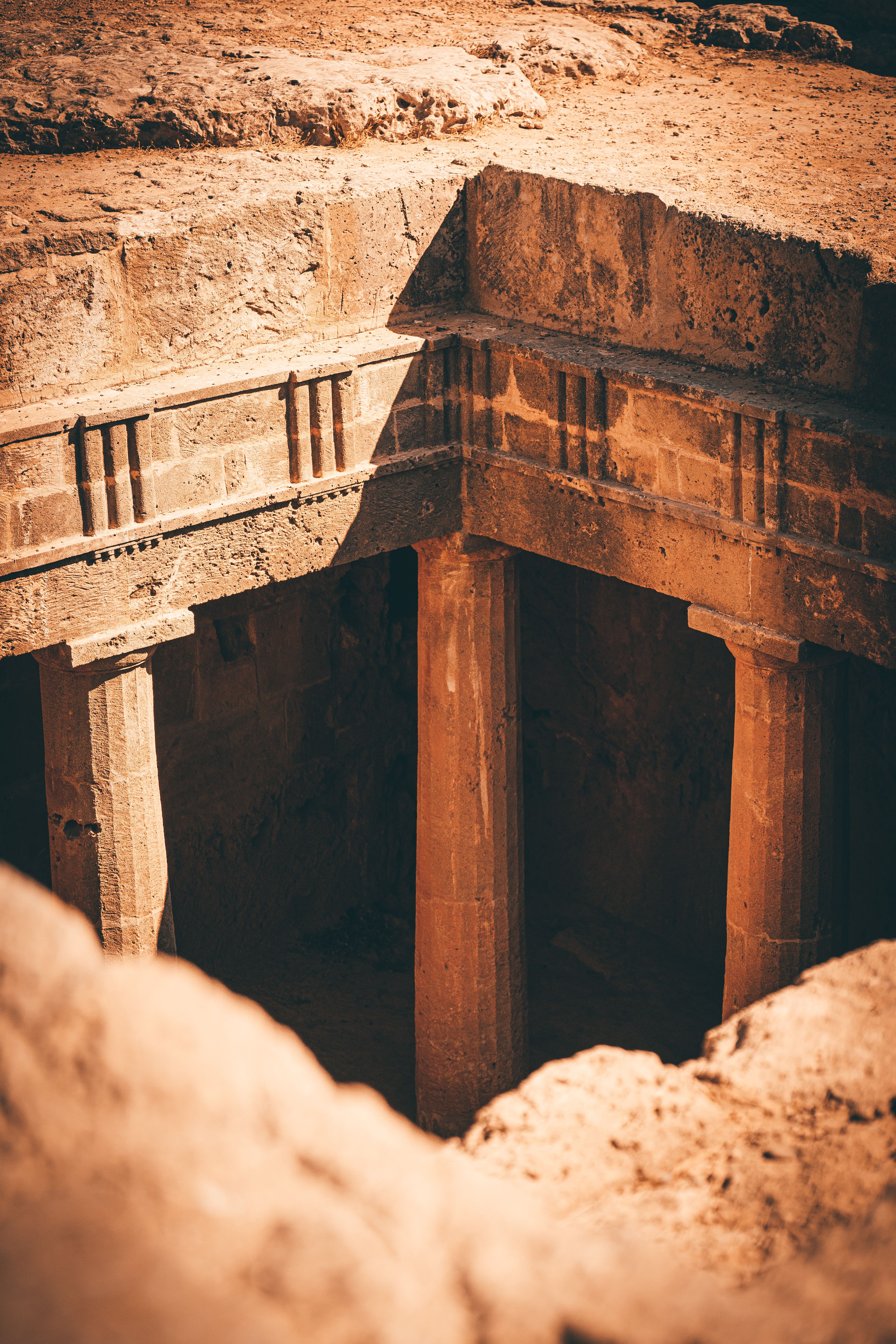
Tombs of the Kings
These were not royal tombs: they were monumental rock-cut tombs for high-ranking officials and aristocrats.
They were not royal tombs.
Kings were not buried here. The tombs were used mainly for high-ranking officials and members of the aristocracy during the Hellenistic and Roman periods. The architecture is extraordinary: monumental tombs carved directly into the rock and courtyards with Doric columns that recreate the houses of the living underground. The site is very exposed to the sun. In warmer months, visit early or late in the afternoon, provided the official opening times allow it.
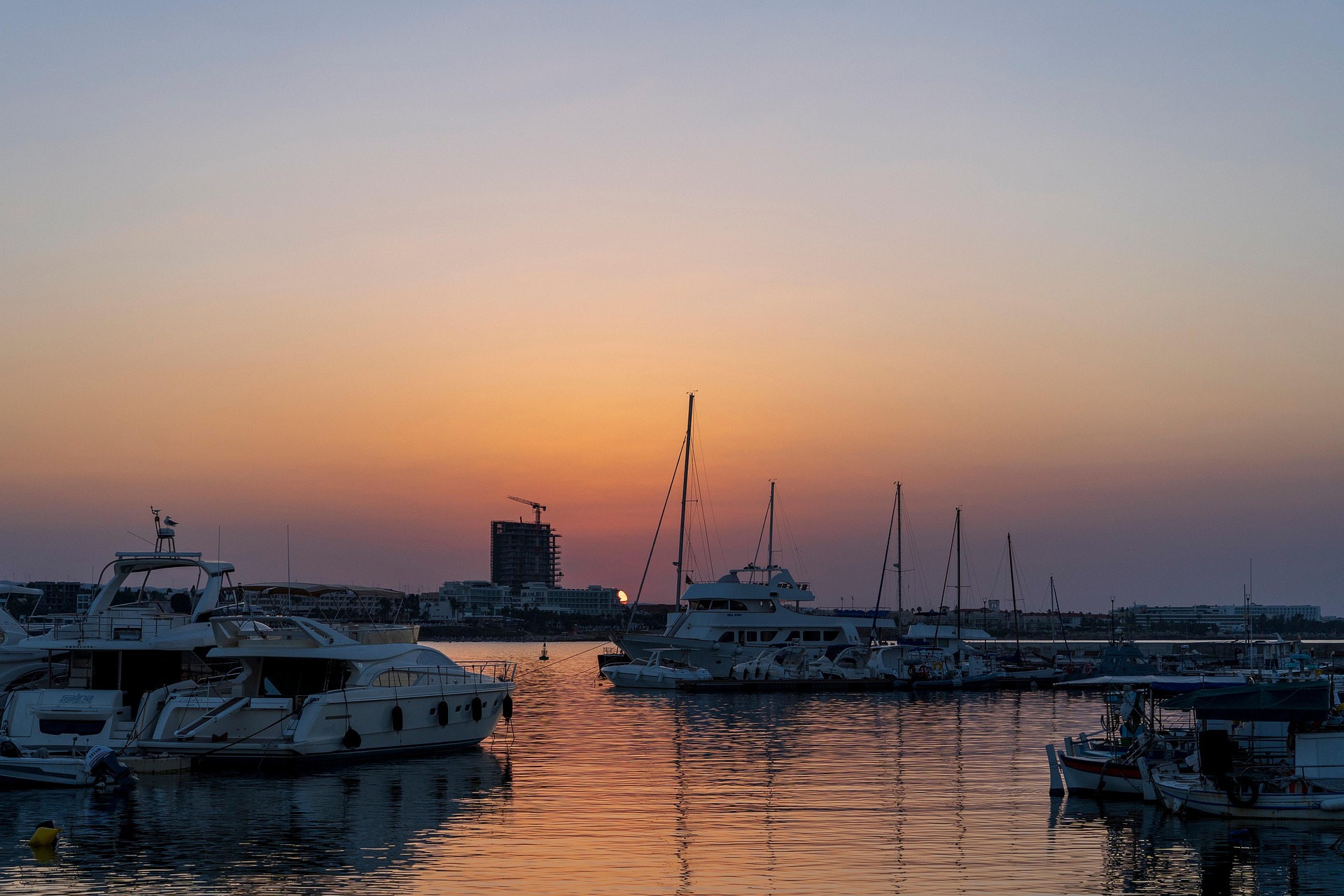
A stroll around Kato Paphos
Harbour + Medieval Castle
The harbour changes the pace after the archaeology. The castle stands at the end and makes most sense as part of the stroll.
At the end of the harbour stands the small medieval castle, shaped by Byzantine, Frankish, Venetian and Ottoman periods. It works best as part of a stroll rather than as a separate visit.
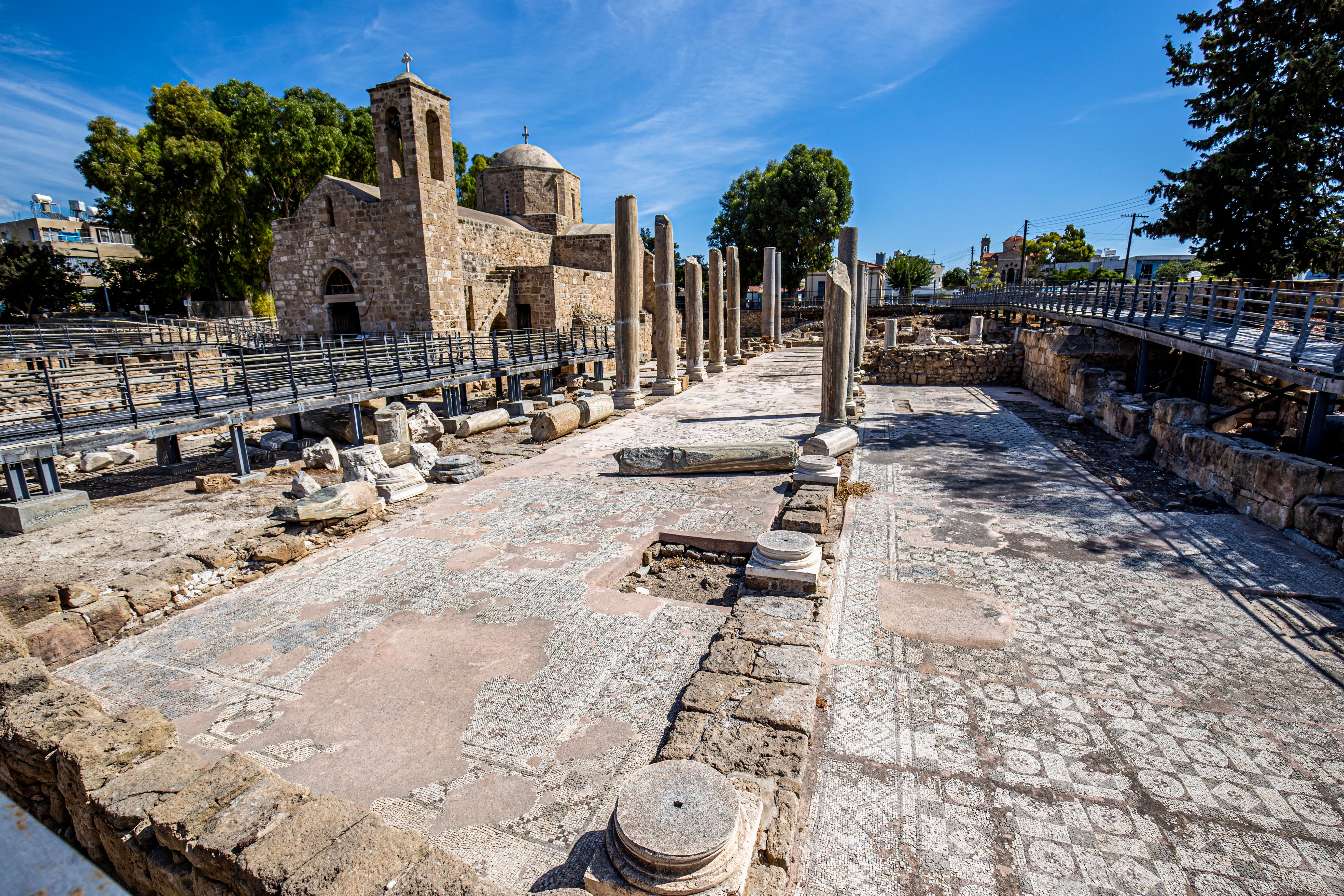
Different eras, one site
Panagia Chrysopolitissa + St Paul's Pillar
A medieval church within the remains of a large early Christian basilica.
The present church stands within the remains of a large early Christian basilica. Mosaics and ancient structures survive around it. The same site contains St Paul's Pillar, linked by Christian tradition to St Paul's visit to Paphos.
Keep exploring
Old Town, coast and tips
Ktima, the area around Paphos, a route for the day and all the practical information.
Keep exploring
Old Town, coast and tips
Ktima, the area around Paphos, a route for the day and all the practical information.
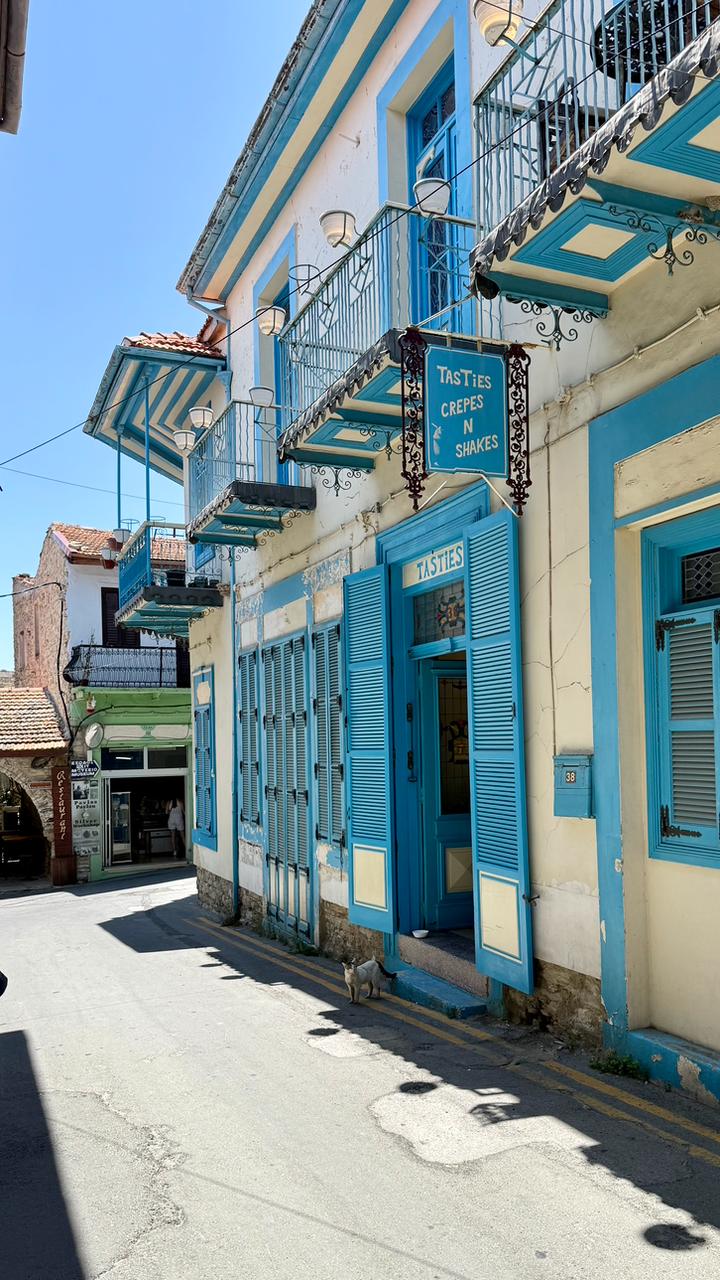
Old Town · Ktima
Head up to the other Paphos.
The upper town: neoclassical architecture, a market, shops, workshops and local life.
After several hours among ruins and along the seafront, the upper town changes the pace completely. Here you will find neoclassical buildings, a market, small workshops, cafés, restaurants and streets that remain part of everyday life in Paphos. It also retains places dedicated to local crafts, from pottery to jewellery and other trades.
A stroll at a different pace
Municipal market
An everyday stop among local produce, small shops and workshops.
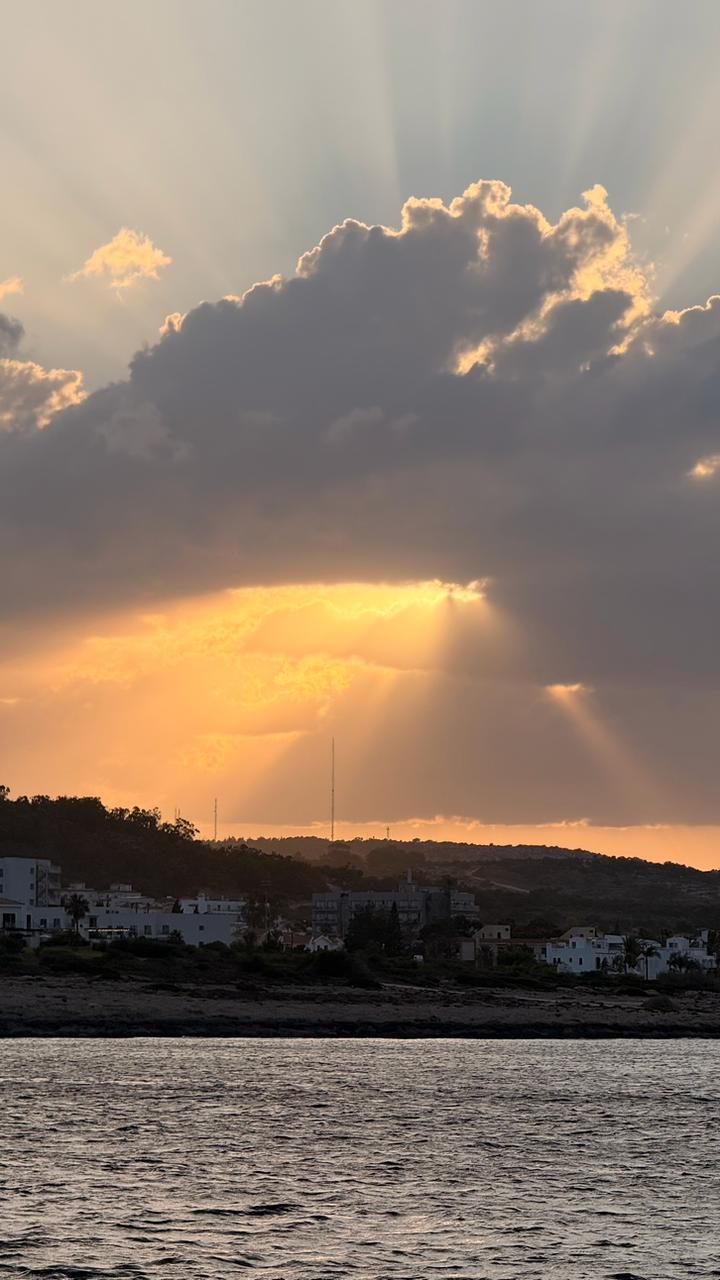
City → surrounding area
Now head out of Paphos.
Because some of this area's oldest stories begin outside the present-day city.
Geroskipou · Palaipafos · Agios Neophytos
Choose a direction beyond the city.
01
Cultural tradition
Geroskipou
A nearby stop for its Byzantine church and loukoumi tradition.
Built in the 9th century, it is one of the most distinctive religious buildings in this part of the island. Five domes define its silhouette, and the interior preserves wall paintings from different periods.
Geroskipou maintains a cultural tradition tied to loukoumi. There is no need to turn it into a food guide: it is part of the local identity.
02
Kouklia · Palaipafos
Palaipafos
The ancient city that preceded the development of Nea Paphos beside the harbour.
Long before the city developed around the harbour, one of the region's great political and religious centres stood here. At the end of the 4th century BC, the city moved towards the coast, to the area where Nea Paphos would develop. Kouklia is more than another archaeological site: it is part of the beginnings of Paphos's history.
The sanctuary at Palaipafos was one of the ancient world's most important centres of worship dedicated to Aphrodite. Its earliest remains date to the 12th century BC, and the site retained its religious role for centuries. The small museum occupies a Lusignan-period building and helps explain how the cult and settlement developed.
Kouklia occupies the territory of ancient Palaipafos, one of Cyprus's main kingdoms and an important centre of worship dedicated to Aphrodite.
03
Something different
Agios Neophytos Monastery
A monastery that grew around a hermitage carved into the rock in the 12th century.
The monastery grew around the Enkleistra, the small hermitage that Neophytos himself carved into the rock in the 12th century. Its interior preserves Byzantine frescoes painted between the 12th and 15th centuries. If you have already explored archaeological Paphos and want to spend half a day on something completely different, this is a good change of direction.
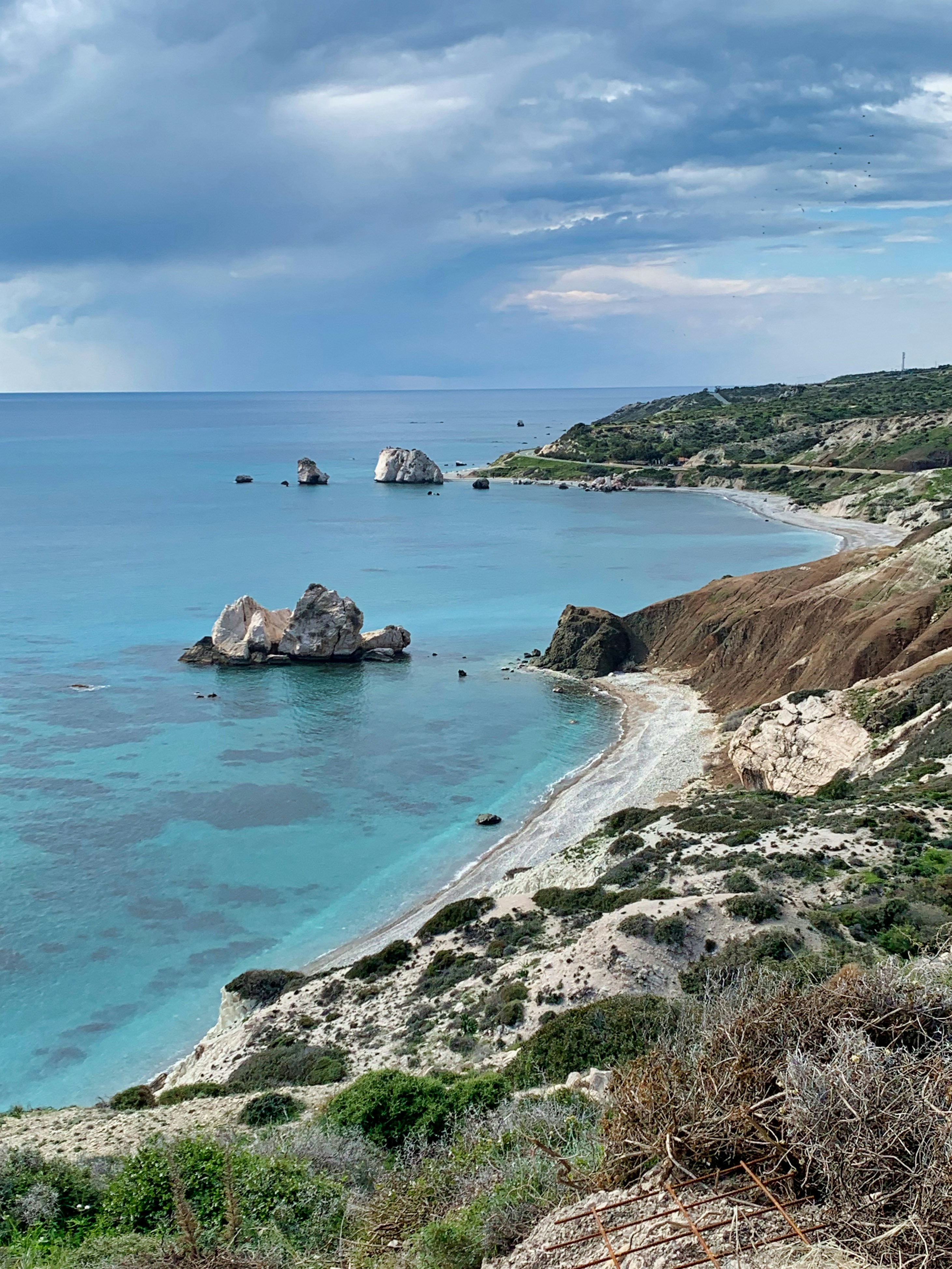
Petra tou Romiou
Where the landscape became a myth.
A rock formation where landscape, mythology and legend meet.
Open in Google MapsUrban coast and beach
If you would like some time by the sea too.
Paphos has a coastline too, but not every stretch needs to become a stop. These options work well if you want to add a few hours by the sea.
Beach · Urban coast
Faros Beach
A convenient option near the Archaeological Park.
Swimming · Urban coast
Municipal Baths
Sea access right in Kato Paphos, easy to combine with exploring the town.
Beach
Coral Bay
More of a classic beach experience, suitable if you have a car and several hours.
A day in Paphos, the way
History, town and sea without trying to see everything.
Step 01
Morning
Kato Paphos
Start with Tombs of the Kings and the Archaeological Park before the sun gets strong.
Step 02
Midday
Archaeological Park
Take your time with the mosaics and do not rush around the site.
Step 03
Afternoon
Harbour
Change the pace beside the harbour and castle.
Step 04
End of the day
Old Town
Head up to the upper town to understand the other half of Paphos.
Second day
If you have a second day.
A short route beyond the present-day city, linking Geroskipou, Kouklia / Palaipafos and Petra tou Romiou.
Step 01
Starting point
Geroskipou
Local life, five domes and cultural tradition.
Step 02
History
Kouklia / Palaipafos
Where a key part of Paphos's history began.
Step 03
Finish
Petra tou Romiou
Finish where landscape, mythology and legend come together.
Seasons
Paphos, season by season.
Winter
recommendsHighly recommended.
One of the best times for archaeology, Old Town, Kouklia and cultural trips without the summer heat.
Spring
recommendsHighly recommended.
Archaeological sites, the coast, excursions and the town are particularly enjoyable throughout the day.
Summer
The sea and the end of the day.
Visit archaeological sites early and save the harbour, dinner and the coast for the end of the day.
Autumn
recommendsHighly recommended.
One of the best times to combine the full route with the coast and archaeological sites.
Practical information
Before you go.
Two days let you combine the city with Kouklia and Petra tou Romiou.
Do not plan your visit assuming all the interesting sights are around the harbour. Kato Paphos brings together archaeology, the seafront and harbour; Old Town changes the pace with the upper town, market and urban life.
Not necessarily for Kato Paphos and Old Town. A car is recommended if you want to explore Kouklia, Petra tou Romiou, Agios Neophytos or other nearby places.
Prioritise Tombs of the Kings, the Archaeological Park, the harbour and Old Town. In summer, visit archaeological sites early or late in the day, within the official opening times.
To continue towards the wild north-west coast, head to Akamas. That area deserves a day of its own rather than a quick stop.
PLANNING YOUR TRIP
Where do I start?
A quick guide to Cyprus to help you make your first decisions. Request it for free and receive it by email.